Designing for Perfection: A Technical Checklist for Your Custom Card Connector
- Share
- publisher
- MOARCONN
- Issue Time
- Feb 5,2026
Summary
A comprehensive technical checklist for designing perfect custom card edge connectors. Ensure reliability and performance in your PCB design with our expert guide.

The global card connector market is projected to reach $5.8 billion by 2027. In this competitive landscape, customized connector design has become a key differentiator. A comprehensive technical checklist helps engineers avoid common pitfalls and ensures the final product's performance and reliability.
01 Electrical Performance: The Foundation of Signal Integrity
Electrical performance is the primary consideration in card connector design. Current-carrying capacity is a basic requirement. For connectors transmitting power signals, derating design is essential, with particular attention paid to insulation withstand voltage between pins—the lifeline against short circuits.
Impedance matching is crucial for signal integrity. RF or high-speed signals are extremely sensitive to impedance mismatch; even minor deviations can cause signal reflection and degradation, affecting the entire system.
The choice of contact material determines the connector's electrical soul. Copper alloys like phosphor bronze and beryllium copper are mainstream choices due to their excellent conductivity and elasticity. Surface finish is the finishing touch; gold plating is indispensable in high-end applications for its stable low contact resistance and high wear resistance.
Gold plating thickness typically ranges from 1.27 to 2.54 microns. This micrometer-level difference often determines the connector's performance in high-frequency environments and its mating cycle life.
Brand Competence: At Moarconn, we deeply understand every detail of electrical performance. From the initial client engagement, our engineering team meticulously explores signal types, frequency ranges, and current requirements to ensure the recommended materials and designs meet the most stringent electrical standards.
02 Mechanical Structure & Dimensions: The Embodiment of Precision Engineering
Form factor is the physical framework of connector design. The connector must fit within the product's spatial constraints, especially in compact single-board designs where interference with other components must be avoided.
Optimizing the contact point geometry enhances contact stability and reduces contact resistance. Insertion/extraction force design requires precise balancing—it must not be too loose (causing poor contact) nor too tight (affecting user experience). This is achieved by precisely controlling the contact spring's preload and elastic design.
Design Advice: Applications with high mating frequency require special attention to the connector's cycle life limit—a durability metric often overlooked by designers.
In mechanical design, mating accuracy is key to ensuring proper alignment with the PCB. High-precision slot or pin arrangement effectively prevents loosening or misalignment during use. Polarization design, through physical keying or asymmetrical structures, prevents damage caused by misoperation.
For equipment operating in vibrating environments, such as automotive electronics, a mechanical locking mechanism is essential. It prevents connector loosening due to continuous vibration, ensuring absolute connection reliability.
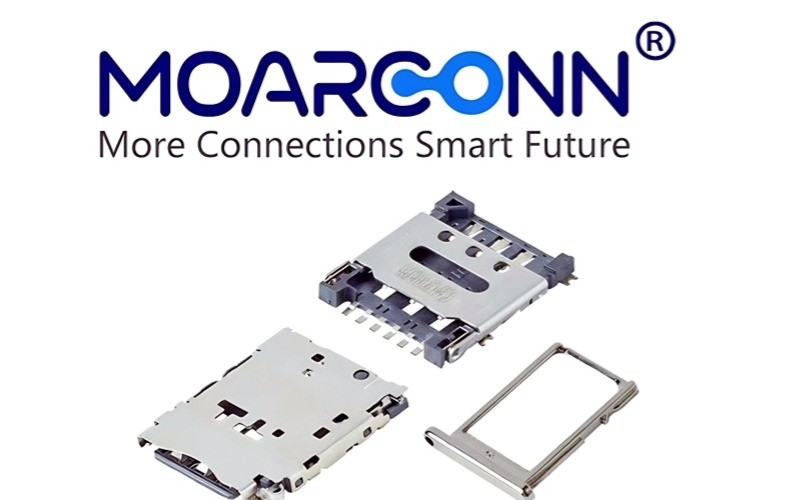
Current mainstream connector types have distinct characteristics: Socket-type connectors are easy to mate and suitable for high-density design; Pin-type connectors offer more reliable contact for high-current scenarios; Locking-type connectors are designed specifically for high-vibration environments, with higher complexity but exceptional reliability.
03 Environmental Durability & Reliability: Meeting Harsh Challenges
Connectors operate in diverse environments—from climate-controlled server rooms to hot, humid industrial sites; from vibration-prone vehicle-mounted devices to salt-spray-filled marine atmospheres. Design must fully consider these environmental endurance requirements.
A complete environmental testing regimen is the scientific method to verify connector reliability, primarily including:
Salt Spray Test: Simulates marine atmospheric conditions to evaluate corrosion resistance.
Temperature Cycling Test: Typically ranging from -40°C to +125°C, verifying thermal stress endurance.
Damp Heat Test: Evaluates performance under the dual challenges of 85°C and 85% relative humidity.
Vibration Test: Simulates mechanical stress at different frequencies and amplitudes to ensure connection reliability.
Mechanical Life Test: Verifies the product's durability limits through repeated mating cycles.
As electronic devices increase in complexity, Electromagnetic Compatibility (EMC) has become an unavoidable design factor. Good shielding design—whether through metal housing or optimized PCB grounding layout—can significantly reduce external electromagnetic interference and internal signal crosstalk.
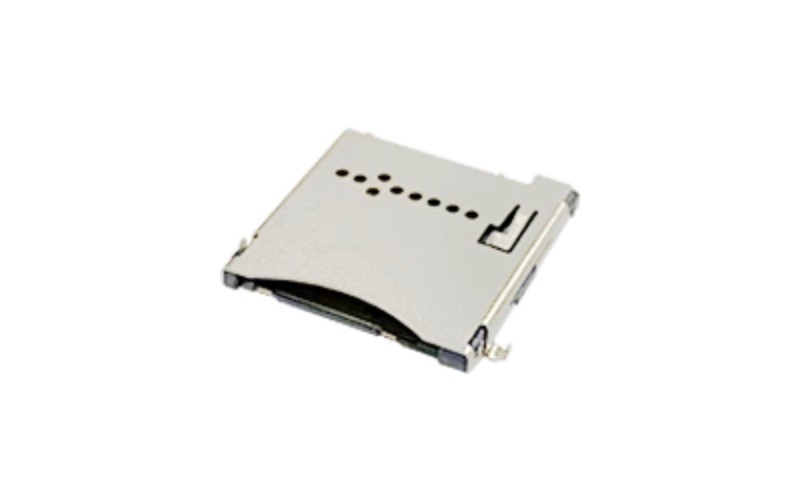
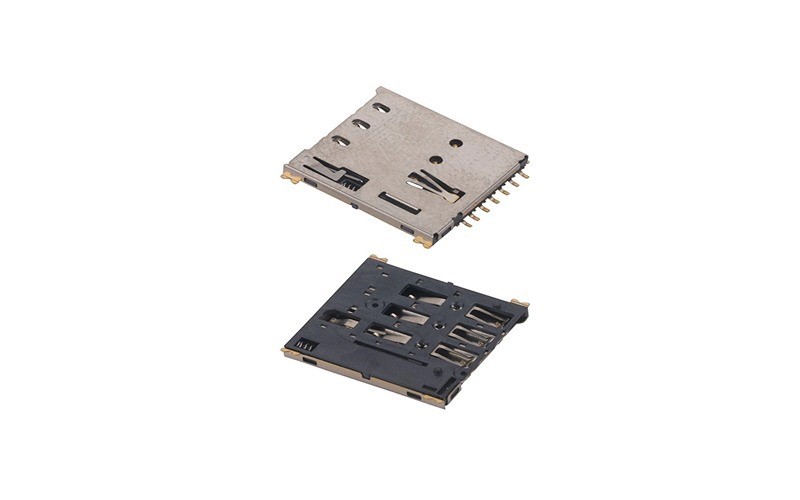
Manufacturing Showcase: Moarconn's full-process quality control system covers every step from raw materials to finished products. We use X-ray fluorescence spectrometers to inspect material composition, high-precision stamping and molding equipment to ensure dimensional accuracy, and conduct bi-hourly sampling inspections of terminal and plastic part dimensional tolerances.

04 Manufacturing & Quality Control: Bridging Design to Product
From design drawings to mass production, manufacturing is the final and decisive step in realizing the design. PCB fabrication tolerances must be strictly controlled; contact finger width and spacing are typically maintained within a precision range of ±0.05 mm.
Edge straightness (deviation in length direction should be less than 0.1 mm) and plating thickness uniformity (fluctuation not exceeding ±10%) are important indicators of manufacturing quality. In soldering processes, the spacing between contact fingers and solder mask is typically designed between 0.2-0.5 mm. A common defect to avoid is solder mask coverage over the contact area.
For gold finger connectors requiring frequent mating, hard gold plating (0.5-1.27 microns of gold over 2.5-5 microns of nickel underplating) can easily support over 1,000 mating cycles due to its excellent wear resistance.
In modern manufacturing workshops, automated production lines equipped with high-precision vision inspection systems can capture dimensional deviations at the micrometer level in real-time. A comprehensive traceability system records production data for each product, enabling full-process monitoring from raw material to finished good.
Inspection protocols should comprehensively cover material inspection, visual inspection, dimensional measurement, functional testing, and error-proofing feature verification. At Moarconn, we implement stringent sampling destructive testing, checking mating cycle life and conductivity every half-hour, maintaining a product qualification rate of over 99.95%—an industry-leading standard.
05 Customization & Future Trends
In product planning, connector commonality is an intelligent strategy to reduce costs and simplify the supply chain. Using common connectors across a product series as much as possible can lower unit prices through centralized procurement while reducing part variety and supply risks.
The industry is moving towards greater miniaturization and higher density, placing higher demands on connector materials and structural design. High-speed signal support capability will become a competitive focus for next-generation connectors.
Smart manufacturing technologies are transforming connector production. The application of automated equipment and AI quality control systems has significantly improved production efficiency and product consistency. Choosing suppliers certified to ISO9001 and IATF16949 standards means obtaining a guarantee of a mature quality management system.
Customization Service Introduction: At Moarconn, we regard every client as a partner, not merely a transaction. From initial concept discussions to final mass production, our engineering team is involved throughout, providing professional advice and tailored solutions. Our goal is not only to supply products but to help clients solve connection challenges and create greater value.
The mechanical life of smart card connectors is typically required to reach 30,000 mating cycles, while the contact gold plating on high-end card-edge connectors can withstand over 1,000 cycles while maintaining performance. Behind these parameters lie countless rounds of material testing, structural optimization, and process improvement.
As global electronic devices increasingly rely on stable and reliable connections, card connectors are no longer simple physical interfaces but critical bridges carrying signals, power, and data. A well-designed connector maintains stability in harsh environments, delivers high performance in compact spaces, and ensures reliability over long-term use.
The golden contact points on the circuit board, under a microscope, reveal perfect geometric alignment. Every successful connection is the perfect union of precision engineering and practical design.