From Consumer Electronics to Industrial Systems: How TF Card Connectors Are Evolving for Reliability
- Share
- publisher
- MOARCONN
- Issue Time
- May 15,2026
Summary
Industrial TF card connectors evolving from consumer electronics with higher reliability for vibration, speed, and harsh environments.
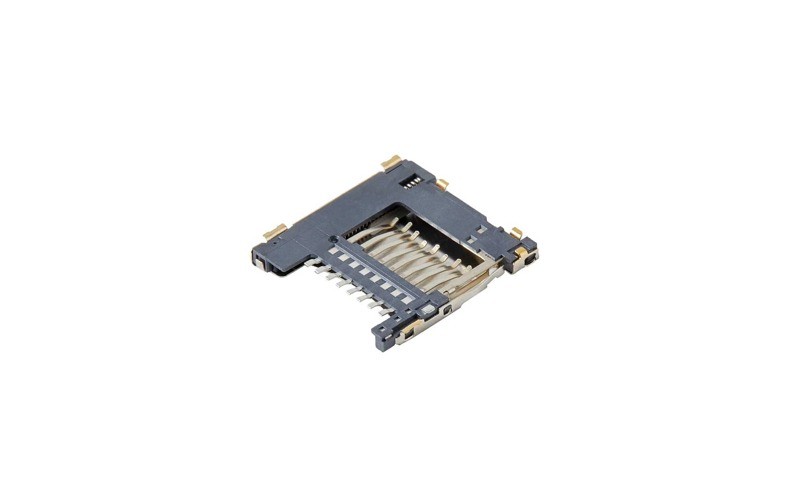
Introduction: TF Card Connectors Are Becoming System-Level Components
TF card connectors (also known as microSD card connectors) were originally designed for consumer electronics such as smartphones, cameras, and portable devices. However, with the rapid development of industrial automation, AIoT systems, automotive electronics, drones, and edge computing, their role has significantly evolved.
Today, TF card connectors are no longer simple storage interfaces. They have become critical components responsible for ensuring data integrity, mechanical stability, and long-term operational reliability in harsh environments.
As industrial systems demand higher performance and stability, connector design is shifting from basic electrical connectivity to full system-level reliability engineering.
1. The Shift from Consumer Electronics to Industrial Applications
In consumer electronics, TF card connectors typically operate under stable conditions with limited vibration, controlled temperature, and short product lifecycles.
In contrast, industrial systems introduce completely different operating environments:
Continuous mechanical vibration
Repeated thermal cycling
High humidity and dust exposure
Long-term operation requirements (5–10 years or more)
These conditions significantly increase the risk of connector failure. As a result, industrial-grade TF card connectors must be designed with enhanced mechanical and environmental robustness.
2. Why Consumer-Grade TF Card Connectors Fail in Industrial Environments
Standard TF card connectors are often not suitable for industrial use due to several common failure mechanisms:
Card loosening under vibration stress
Contact fretting corrosion over time
Mechanical fatigue from repeated insertion cycles
Dust or contamination causing intermittent contact
Thermal expansion mismatch between components
In industrial applications, even minor mechanical instability can lead to system-level failures such as data corruption, device restart loops, or complete communication loss.
This makes reliability not just an advantage, but a requirement.
3. Engineering Evolution of Modern TF Card Connectors
To meet industrial demands, TF card connectors have undergone significant engineering improvements in four key areas.
3.1 Mechanical Structure Enhancement
Modern industrial TF card connectors often include:
Push-push locking mechanisms
Reinforced metal housing structures
Anti-ejection retention systems
Strong PCB anchoring design
These improvements ensure that the card remains stable even under continuous vibration and mechanical stress.
3.2 Electrical Performance and Signal Integrity
With the rise of high-speed standards such as UHS-I, UHS-II, and SD Express, signal integrity has become a key design factor.
Modern TF card connectors focus on:
Lower contact resistance
Optimized terminal geometry
Improved grounding structure
Enhanced EMI shielding
These improvements ensure stable high-speed data transmission in embedded systems.
3.3 Environmental Resistance Improvements
Industrial environments require connectors to withstand:
Extreme temperature ranges (-40°C to +85°C or higher)
High humidity and moisture
Dust and particulate contamination
Chemical exposure in industrial settings
This drives the need for enhanced material selection and structural sealing strategies.
3.4 Reliability and Lifecycle Engineering
Industrial-grade TF card connectors are designed for:
5,000 to 10,000+ insertion cycles
Long-term continuous operation
Stable contact force over time
Reliability is no longer defined only by electrical performance but by long-term mechanical endurance and stability.

4. Application Expansion of TF Card Connectors
TF card connectors are now widely used across multiple industries:
Consumer electronics (smartphones, cameras)
Industrial automation systems
Automotive electronics (ADAS, infotainment, data logging)
UAV and robotics systems
AIoT edge computing devices
As edge intelligence grows, TF card connectors play a critical role in local data storage and system reliability.
5. TF Card Connector as a System Reliability Component
Modern engineering views TF card connectors as part of a complete system reliability chain:
Connector → PCB Design → Signal Integrity → Firmware Stability → System Operation
A failure at the connector level can lead to:
Data loss
System crashes
Intermittent device failure
Increased maintenance cost
Therefore, connector selection has become a critical engineering decision.
6. MOARCONN Engineering Capability in TF Card Connectors
MOARCONN focuses on designing industrial-grade TF card connectors that bridge the gap between consumer electronics and industrial system requirements.
Key capabilities include:
Reinforced mechanical structure for vibration resistance
Stable electrical contact design for high-speed applications
Strict environmental and lifecycle testing
Industrial-grade reliability validation processes
MOARCONN aims to provide connector solutions that ensure stable performance in demanding industrial environments.
7. Future Trends of TF Card Connectors
The future of TF card connectors is driven by several key trends:
High-speed evolution toward SD Express and PCIe-based storage
Miniaturization with stronger structural durability
Integration with AIoT and edge computing systems
Increased demand for real-time data logging and processing
As electronic systems become more intelligent, TF card connectors will continue evolving into core infrastructure components for edge data systems.
Conclusion
The evolution of TF card connectors reflects a major shift in electronics design:
From simple consumer interfaces → to mission-critical industrial reliability components.
Modern TF card connectors must balance mechanical strength, electrical performance, and environmental durability to meet the demands of next-generation systems.