How to Choose the Right Nano SIM Card Connector for Your Project
- Share
- publisher
- MOARCONN
- Issue Time
- May 25,2026
Summary
Learn how to choose the right Nano SIM card connector for your project, covering design tips, specs, and reliability.
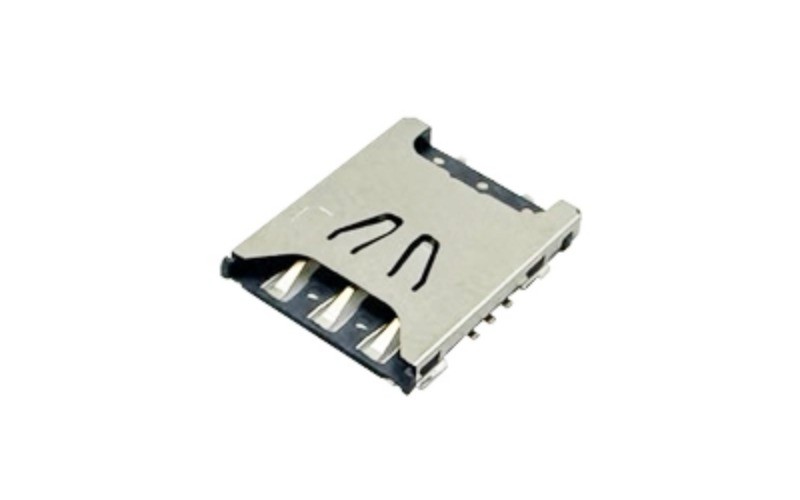
How to Choose the Right Nano SIM Card Connector for Your Project
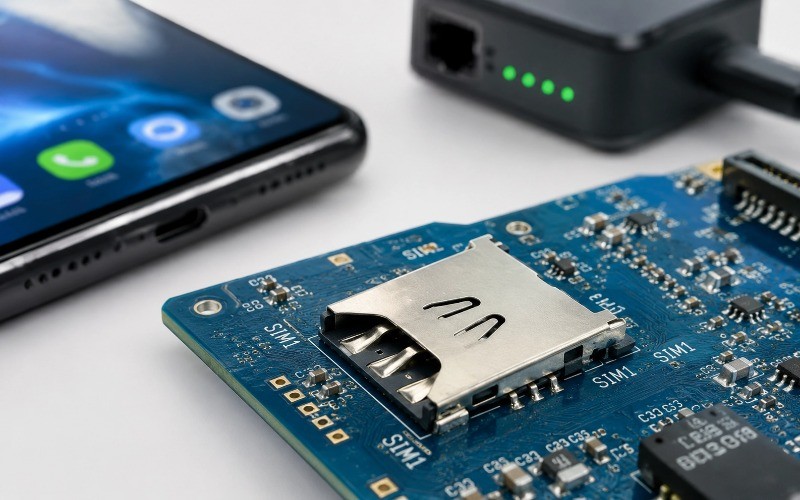
Choosing the right Nano SIM Card Connector is a critical decision for any electronic product engineer — especially when compact size, durability, and reliability are key design requirements. At Moarconn, a trusted supplier of high-performance connectors and PCB components, we’ve helped thousands of engineers specify optimal SIM connectors for everything from smartphones and tablets to IoT devices, M2M modules, and rugged industrial systems.
This guide consolidates the best practices from the industry — backed by real engineering experience — to help you understand critical factors, make better decisions, and ensure your product success
What is a Nano SIM Card Connector?
A Nano SIM Card Connector is an electromechanical interface that securely holds and connects a Nano SIM (4FF) card to your device’s PCB, enabling communication between the SIM and cellular modem. Due to its small size and precise mechanical requirements, proper selection plays a key role in product quality and field reliability.
At Moarconn,we offer a wide range of Nano SIM connectors engineered to meet demanding specifications and diverse application needs.
Key Selection Criteria for Nano SIM Card Connectors
Before choosing a connector, you must understand the key parameters that influence performance, manufacturability, and end-use reliability.
1. Mounting Style & Housing Type
Nano SIM connectors come in different mechanical styles:
Top Mount – Soldered on top of the PCB, minimal footprint
Mid Mount / Side Mount – Lower profile, easier card insertion
Tray Type – Easiest user experience, common in consumer devices
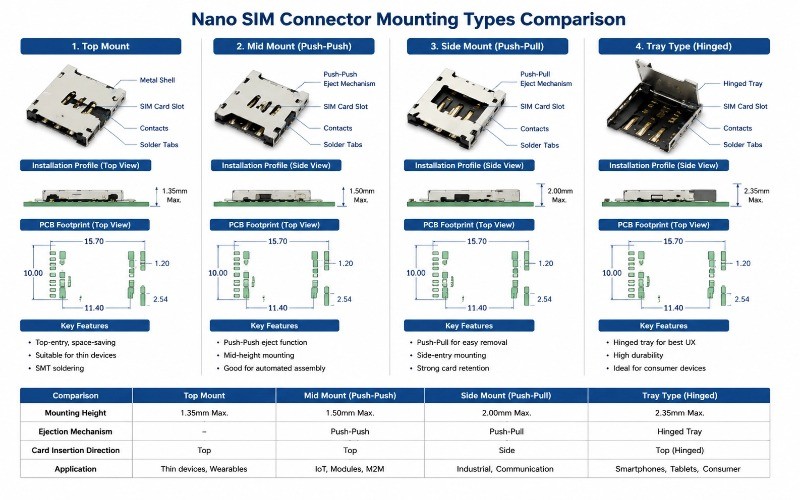
Each style affects board space, assembly cost, and user experience. At Moarconn, we provide consultative engineering support to help you pick the right style based on your enclosure, usage, and manufacturing plan.
2. Ejection Mechanism: Push-Push vs Push-Pull vs Hinged
The connector’s ejection mechanism affects usability and durability:
Push-Push: Push in once to insert, push again to eject
Push-Pull: Push to insert, pull to eject
Hinged/Tray: Opens like a drawer
Understanding how end users interact with your product hardware is crucial — for example, push-push mechanisms are compact and popular for embedded IoT modules, while hinged tray designs are preferred for high-volume smartphones due to ease of use.
3. Mechanical Durability & Insertion Cycles
Durability is often expressed through insertion cycle ratings, e.g., 5,000+ cycles. High-cycle connectors deliver long-term reliability — especially important for devices that may experience frequent card changes.
At Moarconn, our Nano SIM connectors undergo rigorous durability testing, and we publish insertion cycle specifications so engineers can match connector life with product requirements.
4. Electrical Performance & Contact Reliability
Reliable electrical contact between a Nano SIM and PCB ensures stable communication without data loss or intermittent connection. Critical factors include:
Contact material and plating (e.g., gold plating for corrosion resistance)
Contact resistance and signal integrity
ESD protection and grounding design
5. PCB Layout, Height, and Footprint
Nano SIM connectors are tight mechanical components that require careful PCB footprint planning:
Connector footprint vs PCB real-estate
Clearance for enclosure design
Height constraints for slim devices
Moarconn’s engineering team provides CAD models and layout guidelines to reduce design rework and ensure first-pass success.
Best Practices for Engineering Teams
Here are practical tips based on real Moarconn design successes:
a. Validate Connector Type Early in Design
Choose and test your connector early, ideally during the DFM / prototype stage, to avoid late changes.
b. Consider the End-User Interaction
Smart consumer electronics may prioritize easy SIM access, while industrial automation devices may prioritize rugged locking and vibration resistance.
c. Work with Component Suppliers Like Moarconn
A trusted supplier can provide product recommendations, reliability data, datasheets, and 3D models tailored to your project.
At Moarconn, we partner with engineering teams throughout the development cycle to ensure connectors are specified correctly the first time.
Moarconn Nano SIM Card Connector Solutions
We offer a broad portfolio of Nano SIM connectors engineered for performance and reliability:
Connector Type Key Features Typical Usage
Push-Push Nano SIM Compact, secure IoT modules, embedded systems
Push-Pull Nano SIM Easy eject Mobile devices, tablets
Hinged/Tray Nano SIM User-friendly Smartphones & consumer devices
Low-Profile Nano SIM Minimal height Wearables, slim designs
Every connector is backed by Moarconn’s quality assurance, material traceability, and engineering support.
FAQs – Nano SIM Card Connector Selection
Q1. What’s the difference between Push-Push and Push-Pull mechanisms?
A: Push-Push locks with every push and ejects with a second push. Push-Pull locks when pushed and ejects when pulled. Push-Push is typically more compact, while Push-Pull provides more intuitive removal.
Q2. How many insertion cycles should I expect?
A: Most industrial-grade connectors are rated for 5,000+ cycles. Moarconn connectors often exceed industry minimums; check specific datasheets.
Q3. Should I use low-profile or standard connectors?
A: Low-profile connectors are ideal for slim products like wearables, but they require precise height tolerance during assembly
Q4. What PCB layout practices improve reliability?
A: Follow supplier footprint guidelines, allow for adequate solder fillet, and avoid tight routing under the connector body.
Why Choose Moarconn for Nano SIM Card Connectors?
Engineering Expertise: Decades of connector design experience
Comprehensive Support: Datasheets, CAD models, design review
Product Quality: Tested for mechanical and electrical reliability
Global Supply Chain: Reliable sourcing and fast delivery
Visit www.moarconn.com to explore our full range of Nano SIM connectors and contact our engineers for specification assistance.