Mechanical Mastery: How to Choose the Right Push-Push SD Connector Based on Durability and Form Factor
- Share
- publisher
- MOARCONN
- Issue Time
- Mar 4,2026
Summary
MOARCONN Push-Push SD connectors feature smooth ejection mechanism, compact 1.85mm height, and 10,000-cycle durability—ideal for space-constrained designs.
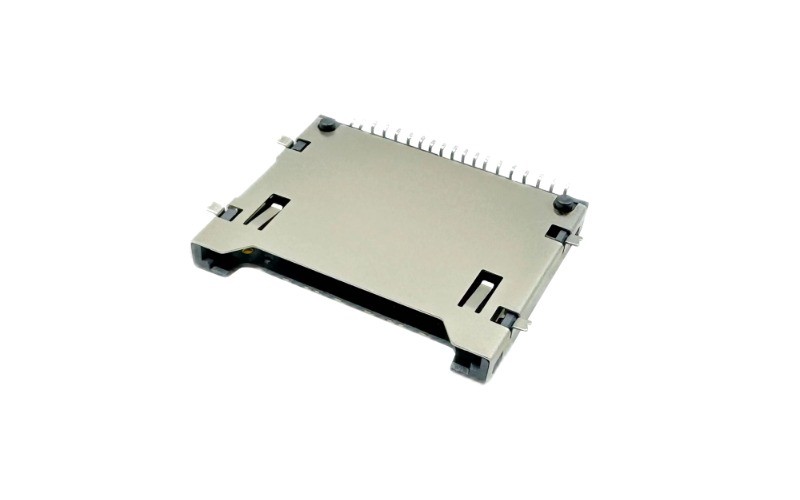
In the world of portable electronics, the humble SD card connector is a critical gatekeeper of data and user experience. For engineers and designers, selecting the right connector—specifically a Push-Push SD card connector—is a balancing act between mechanical robustness and physical space. A poor choice can lead to card ejection failures, signal interruptions, or even PCB damage.
This guide focuses on the mechanical mastery of selection, helping you navigate the key parameters of durability and form factor. At MOARCONN, we understand these challenges intimately, and our product lines are engineered to meet the rigorous demands of modern applications, from industrial PDAs to consumer drones.
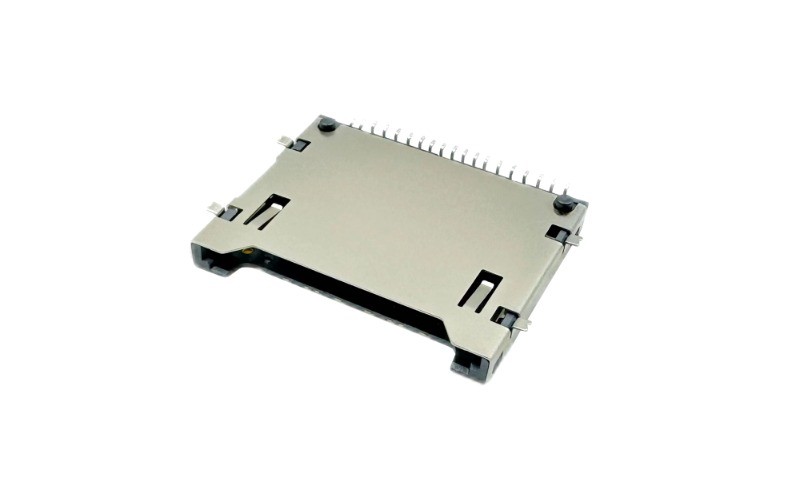
1. Decoding Durability: Beyond Just "Mating Cycles"
Durability is often quantified by "mating cycles"—the number of times a card can be inserted and removed before electrical or mechanical failure. But as an engineer, you know the real story lies in the details.·
Understanding Lifecycle Ratings: Standard Push-Push connectors typically offer 5,000 to 10,000 cycles. For consumer devices like cameras or gaming consoles, 5,000 cycles may suffice. However, for industrial data loggers or automotive infotainment systems where cards are frequently swapped, a 10,000-cycle rating is non-negotiable. For example, ITT Cannon's CCM05 series datasheet specifies ≥5,000 cycles for Push-Push types and ≥10,000 cycles for standard/reverse types, highlighting that the mechanism itself impacts longevity.
The Physics of Insertion and Withdrawal: The feel of the mechanism—its tactility—is defined by insertion and withdrawal force.
Insertion Force: Should be high enough to ensure a firm lock but low enough for a smooth user experience. Specifications often cite a maximum, like 40 N max. for insertion.
Withdrawal Force: This must be sufficient to retain the card against vibration. A minimum withdrawal force, such as 2 N min. , ensures the card doesn't accidentally eject. The contact force of individual pins (e.g., 0.20 N min. ) also guarantees a reliable electrical connection over the connector's life.
Material Science for Long Life: Durability is a direct result of materials.
Contacts: Look for phosphor bronze contacts with a gold-over-nickel plating. The nickel underplate provides a barrier, while the gold ensures low contact resistance (ideally <100 milliohms) and prevents oxidation over thousands of cycles.
Housing & Cover: A high-temperature thermoplastic (UL 94V-0) housing withstands lead-free reflow soldering. A sturdy metal cover, often with ground tails and front metal tabs, provides structural integrity and improves resistance to PCB tear-off during accidental yanking.

2. Conquering Space: The Art of the Form Factor
As devices shrink, so does the budget for component height and PCB real estate. The "form factor" of your SD connector is as critical as its electrical performance.
Height Profile: Standard, Lower, Lowest:
Standard Profile: Ranging from 2.65 mm to 4.00 mm, these are common in set-top boxes and larger peripherals.
Low Profile / Ultra-Thin: For wearables, action cameras, and slim medical devices, every millimeter counts. Connectors as low as 1.85 mm or even 2.10 mm are available. MOARCONN's ultra-thin Push-Push series, for instance, achieves heights under 1.95 mm without compromising the "push" feel, making them ideal for space-constrained designs.
PCB Real Estate: Footprint and Mounting:
SMT vs. DIP: Surface Mount Technology is the standard for high-volume, automated assembly. Components must withstand reflow profiles (e.g., 230°C / 5 seconds or higher).
Landing Features: Features like locating pegs are not just assembly aids; they provide additional shear force resistance after soldering, preventing the connector from lifting off the board during card insertion.
Additional Mechanical Considerations:
Card Presence Detection: Most Push-Push connectors include a card detect switch. This mechanical switch closes or opens a circuit upon full insertion, allowing the system to wake up or mount the drive automatically.
Write Protect Switch: Though less common in microSD form factors, standard SD connectors may include a mechanical write-protect switch, adding another layer of mechanical complexity.
3. Making the Right Choice: A Practical Guide for Engineers
So, how do you synthesize durability and form factor for your specific project? Here is a step-by-step decision framework:
Define the Environment: Is it a controlled indoor environment (e.g., a digital camera) or a harsh outdoor setting (e.g., a GPS tracker on a motorcycle)? For high-vibration environments, prioritize connectors with robust metal covers and higher withdrawal force. Check datasheets for vibration and mechanical shock test results to ensure reliability.
Quantify User Interaction: How often will the user swap cards? For a consumer dashcam, maybe a few times a year. For an industrial data collector, potentially dozens of times a day. Match the mating cycle rating to this frequency.
Calculate Your Z-Height Budget: Measure the internal height of your enclosure. Subtract the PCB thickness and required clearance. The remainder is your maximum connector height. This number alone will often dictate your available options.
Prototype and Validate:
Footprint Accuracy: Always download the manufacturer's recommended land pattern. A slight deviation can cause tombstoning or poor solder joints.
Mechanical Fit: Physically test the connector with actual SD cards from different manufacturers, as card thickness can vary slightly.
ESD and EMI Protection: Remember, the card slot is a direct path for ESD. Plan for TVS diodes on your data lines, and consider connectors with grounded metal covers for EMI shielding.
Conclusion: Partnering for Mechanical Excellence
Selecting the right Push-Push SD card connector is a critical mechanical engineering decision that directly impacts product reliability and user satisfaction. By carefully evaluating durability metrics like mating cycles, insertion force, and material quality, alongside form factor constraints like height and footprint, you can make an informed choice.
At MOARCONN, we specialize in providing high-quality SD card connectors that strike the perfect balance between robustness and miniaturization. Our Push-Push series is engineered with precision mechanics, using advanced materials to ensure over 5,000 cycles of smooth operation in a compact, SMT-friendly package. Whether you are designing the next generation of compact drones or rugged industrial handhelds, we have the mechanical expertise and product range to support your success.
Ready to master the mechanics of your next design? Explore MOARCONN/certificate.htm's full range of Push-Push SD connectors and download our detailed technical datasheets today.