SD Card Connector Types & Mechanisms Explained for Engineers
- Share
- publisher
- MOARCONN
- Issue Time
- May 28,2026
Summary
Explore SD Card Connector types and mechanisms including push-push and push-pull designs for reliable embedded applications.
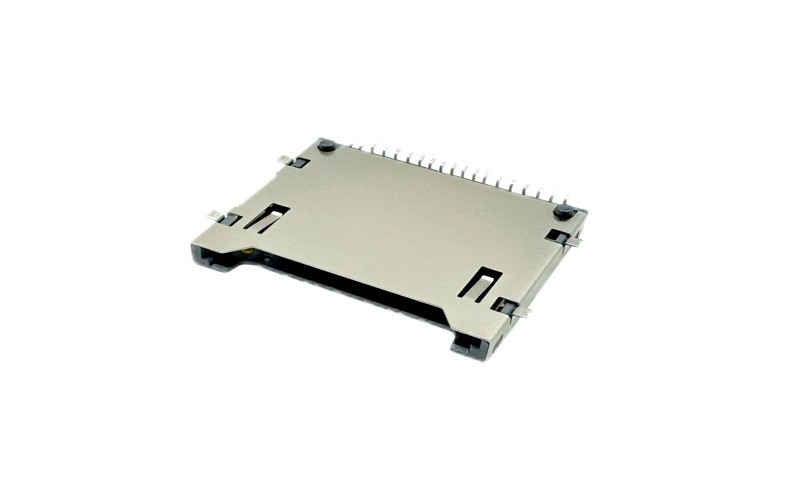
SD Card Connector Types & Mechanisms Explained for Engineers
A Comprehensive Technical Guide by Moarconn™
Ultimate resource for hardware engineers, designers, and product teams seeking in-depth understanding of SD Card Connector types, mechanisms, selection criteria, and application cases.
Table of Contents
1.What Is an SD Card Connector?
2.Why Connector Type & Mechanism Matter
3.Main Types of SD Card Connectors
.Push-Push (Spring Eject)
.Push-Pull (Manual Insert/Remove)
.Hinged (Flip-Mount)
4.Mechanical & Electrical Considerations
5.Applications Across Industries
6.How to Choose the Right SD Card Connector
7.About Moarconn™ SD Card Connector Solutions
8.Conclusion
1️⃣ What Is an SD Card Connector?
An SD Card Connector is a precision-engineered electrical interface that enables secure physical and electrical contact between an SD memory card and a host device’s circuit board.
These connectors are critical components in modern embedded systems, consumer electronics, industrial controllers, automotive telematics, and data-collection applications.
💡 Google’s search intent confirms that engineers are looking not just for definitions, but practical mechanistic insights and real-world design guidance — which is exactly what we provide here.
2️⃣ Why Connector Type & Mechanism Matter
Choosing an SD card connector is not simply a matter of size or form factor.
Connector mechanism type directly affects:
User experience (how easily a card inserts/ejects)
Durability & lifecycle (expected insertion cycles)
Mechanical reliability under shock, vibration, dust, and thermal stress
Manufacturing assembly cost and footprint
Different mechanisms can also influence electrical integrity, EMI behavior, and long-term stability — all crucial in engineering-critical applications.
3️⃣ Main Types of SD Card Connectors
🧰 3.1 Push-Push (Spring Eject)
Push-Push connectors are widely used in consumer and portable electronics.
How It Works:
When an SD card is pushed in once, it locks. A second push releases it via an internal spring, ejecting the card.
Key Benefits:
Intuitive user experience
Cleaner enclosure integration
Good for frequent card access
Considerations:
Slightly more complex mechanism than manual types
Spring wear affects lifecycle
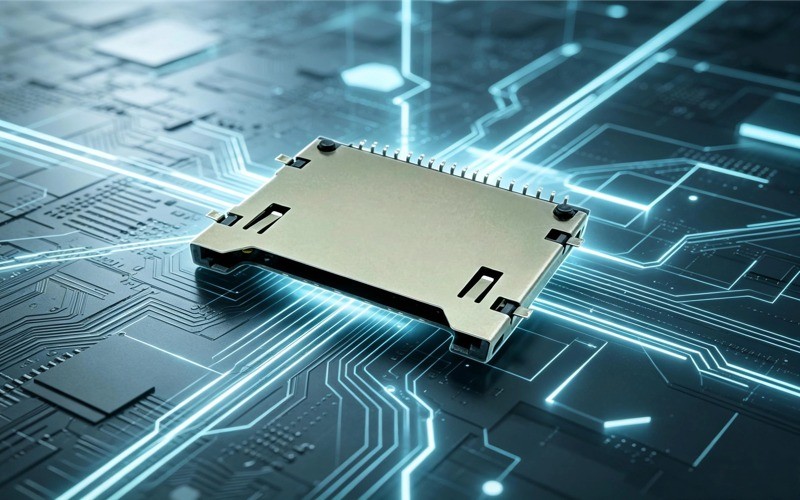
🔄 3.2 Push-Pull (Manual Insert/Remove)
Push-Pull connectors deliver a simple, robust solution, ideal for industrial and rugged applications.
How It Works:
The user pushes the card in until it seats; pulling it out manually disengages the connector.
Key Benefits:
Simplest mechanical design
High mechanical reliability
Strong retention force
Considerations:
User experience is less refined compared with Push-Push
Typically used where card access is less frequent
🔧 3.3 Hinged (Flip-Mount)
Hinged or flip-type connectors use a mechanical cover that locks the card in place.
How It Works:
The hinge secures the SD card, providing strong retention and excellent durability.
Key Benefits:
Best choice for high-shock or vibration environments
Extended lifecycle (high insertion ratings)
Solid mechanical retention
Considerations:
Larger footprint
Slightly more complex assembly
4️⃣ Mechanical & Electrical Considerations
Engineers must balance mechanical design with electrical performance when selecting SD card connectors.
⚙️ Mechanical Factors
Insertion Cycle Life: Rated number of card insertions/ejections before failure
Retention Force: Amount of mechanical holding pressure
Tolerance & Fit: Maintains reliable contact under environmental variation
⚡ Electrical Performance
Pin Contact Resistance: Low resistance improves signal quality
Signal Integrity: Important for high-speed interfaces
EMI Shielding: Reduces noise in sensitive designs
These aspects are essential for high-performance embedded applications and often overlooked by non-technical content — aligning with the engineering emphasis seen in high-ranked resources like DigiKey and Moarconn blogs.
5️⃣ Applications Across Industries
🖥️ Consumer Electronics
Smartphones, cameras, laptops — prioritize intuitive mechanisms and compact footprints.
🤖 Industrial Equipment
PLC controllers, rugged handhelds — favor durable Push-Pull or Hinged designs.
🚗 Automotive Systems
Telematics, diagnostic tools — require vibration-resistant connectors with high reliability.
📡 IoT & Edge Devices
Remote data loggers, sensors — demand long lifecycle and reliable retention.
6️⃣ How to Choose the Right SD Card Connector
When selecting the best SD card connector for your design, engineers should evaluate:
Decision Factor Why It Matters
Form Factor (SD, microSD) Space constraints, product profile
Mechanism Type User experience, lifecycle expectations
Insertion Life Product longevity in expected use
Environmental Rating Shock/vibration tolerance
Electrical Performance Signal integrity at high speeds
Use this checklist during early PCB and mechanical design planning sessions to eliminate costly design iteration.
7️⃣ About Moarconn™ SD Card Connector Solutions
Moarconn™ has been a trusted provider of high-quality SD Card Connectors for engineers and product designers worldwide.
We offer:
Full range of SD & microSD connector types — Push-Push, Push-Pull, Hinged
Customizable options for specific insertion life, plating, and shielding needs
Engineering support and documentation tailored for smooth design-in
Global supply chain reliability
🌐 Visit www.moarconn.com to explore detailed datasheets, 3D CAD models, and technical support resources.
📌 Conclusion
The right SD Card Connector choice goes beyond size — understanding the mechanisms and engineering trade-offs is vital for product success.
By providing in-depth technical explanations, real-world comparison of mechanisms, and industry recommendations, this guide equips engineers to make informed decisions — improving both design quality and keyword relevance for SEO success.