The Future of Card Connectors in Automotive Electronics
- Share
- publisher
- www.moarconn.com
- Issue Time
- Nov 12,2026
Summary
As vehicles become software-defined, the card connector is evolving into a mission-critical component. MOARCONN explains the four trends reshaping automotive card sockets and what they mean for your next in-vehicle design.
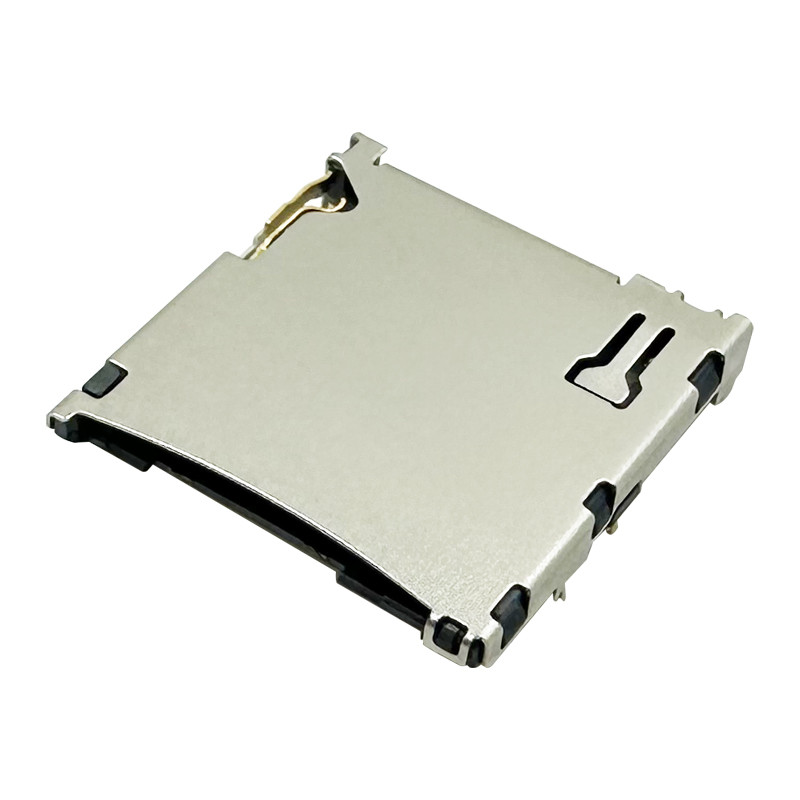
Why the card connector now matters inside the car
Twenty years ago, a card socket in a vehicle was little more than a memory expansion slot for the navigation map. Today the car is a software-defined platform, and the lowly card connector has become a load-bearing component. It carries the navigation map, the T-Box telematics identity, the dashcam recording and the in-cabin infotainment storage, often all at once.
Four trends are quietly raising the bar for card connectors in automotive electronics, and they matter to anyone who specifies, sources or assembles them.
Trend 1 - Automotive-grade reliability becomes the baseline
Consumer-grade card sockets are no longer enough. Automotive programs increasingly require connectors that have passed the ISO 16750-3 road-load vibration profile and that hold up across a -45 to 80 degrees Celsius operating window. The requirement is no longer that it works on the bench, but that it survives years of potholes, thermal cycling and dust.
At MOARCONN this is engineered in rather than tested on: terminals are gold-plated to at least 0.025 micrometres, contact resistance is held to 30 milliohms or less, and solder coplanarity is controlled to a 0.05 millimetre maximum.
Trend 2 - High-speed storage pushes SD 8.0 into the vehicle
Dashcams, ADAS data logging and high-resolution maps are driving storage bandwidth up. The SD 8.0 interface tops out at 4 GB/s, and the connector is the first link in that signal chain. Solder coplanarity and contact stability directly decide whether the link stays clean at speed, which is why coplanarity tolerance has become a headline spec for automotive card sockets.
Trend 3 - Miniaturization meets higher pin density
Cabin electronics keep shrinking while adding functions. Nano SIM card sockets now go down to 1.1 millimetres in height, and the trend points smaller still. Smaller form factors put pressure on molding precision, because a housing that is off by a few hundredths of a millimetre will not seat the card reliably over thousands of cycles.
Trend 4 - Smart card sockets for secure vehicle identity
eCall, digital keys and secure payment in the cabin all rely on smart card sockets. These need clean, low-resistance contact for secure reads, and they must survive the same vibration and temperature extremes as the rest of the vehicle.
How MOARCONN supports your automotive program
MOARCONN is an IATF 16949-certified card socket connector manufacturer with in-house mold making, metal stamping and injection molding. That vertical integration keeps development to 25 days and sampling to 7 days, with zero MOQ and free samples, so an automotive team can go from drawing to qualified parts without waiting on an external supply chain.