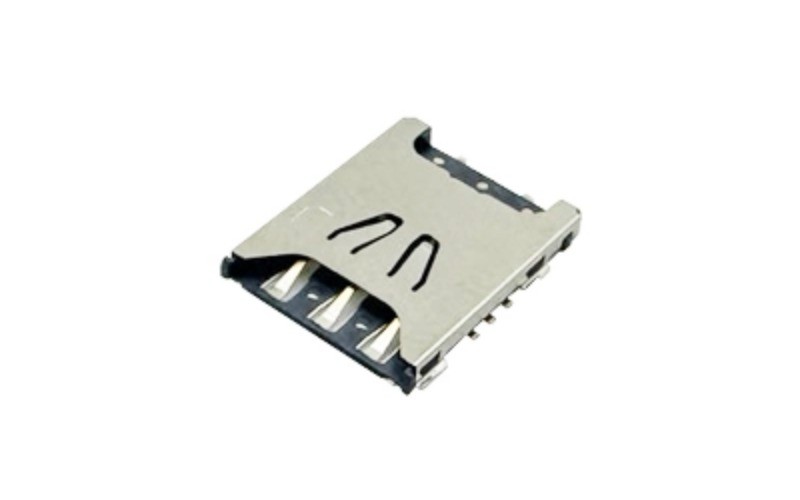
Nano SIM Card Connector Quality Inspection: Manufacturer’s Checklist

Nano SIM Card Connector Quality Inspection: Manufacturer’s Checklist

Summary

Choosing a trusted manufacturer like MOARCONN greatly reduces failure rates and improves device reliability.
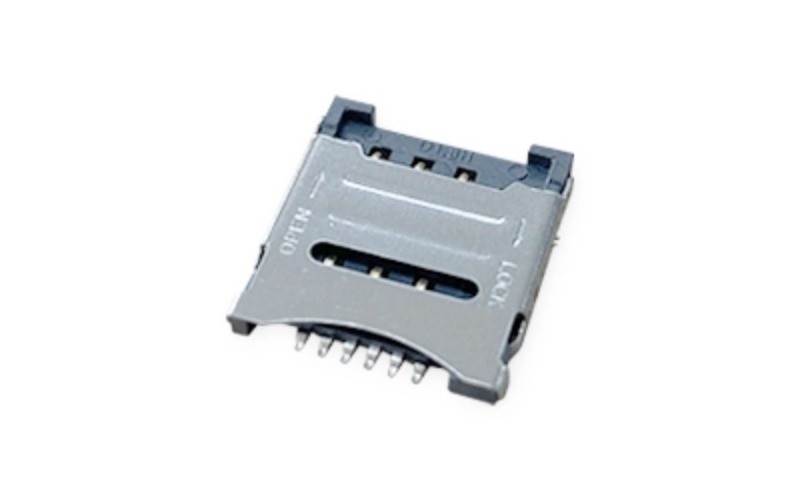
Nano SIM Card Connector Quality Inspection: Manufacturer’s Checklist

1. Introduction: Why Nano SIM Connector Quality Matters


Nano SIM card connectors are widely used in IoT trackers, smart meters, industrial terminals, payment devices, and automotive electronics. A low-quality connector may lead to intermittent signal loss, card ejection issues, device malfunction, and costly after-sales returns.

As a professional connector manufacturer from Dongguan, MOARCONN specializes in Nano SIM, Micro SIM, SD, and Micro SD connectors with more than 15 years of engineering and production experience.
SIM Connector

2. Dimensional Accuracy Inspection


Nano SIM connectors require extremely tight tolerances, often within ±0.05 mm. Manufacturers need to check:

Housing dimensions

Terminal pitch

Contact height & coplanarity

Card insertion depth

Metal shell alignment
SIM Connector

3. Contact Terminal Inspection


The performance of Nano SIM connectors highly depends on the terminals. Key QC items:

Plating type & thickness (Gold, Ni-Pd-Au, Tin)

Terminal elasticity

Initial contact resistance

Deformation or bending

Surface cleanliness

MOARCONN Advantage:
MOARCONN uses automated stamping and imported gold-plating to maintain stable contact force and ultra-low resistance.

4. Mechanical Reliability Tests


4.1 Insertion/Extraction Cycle Test


Standard Nano SIM connectors must withstand 5,000–10,000 cycles. This ensures terminals do not fatigue and the housing does not deform.

4.2 Card Retention & Eject Force


The connector must not grip too loosely or too tightly; both conditions may cause device failure.

4.3 Shell Strength / Anti-Drop / Vibration


For industrial or automotive devices, connectors must handle high vibration, shock, and rough usage.

5. Environmental Reliability Tests


To ensure durability in harsh environments, manufacturers must perform:

High temp test (85–105°C)

Low temp test (-40°C)

Thermal shock

Humidity test (95% RH)

Salt spray test

Dust resistance

MOARCONN conducts all environmental tests in-house to guarantee product reliability.

6. Optical / Vision Inspection


According to Cognex best practices, vision systems detect issues that human eyes may miss:

Terminal alignment

Missing terminals

Housing defects

Surface contamination

Assembly errors

7. Electrical Performance Tests


Key tests include:

Initial contact resistance

Resistance after cycling

Insulation resistance

Withstand voltage

Signal integrity tests

ESD resistance

8. Packaging Quality Inspection


Before shipping, manufacturers must check:

Tape-and-reel alignment

Pocket protection

Anti-static packaging

Lot traceability

Drop & vibration safety during transport

MOARCONN includes QC reports and RoHS/REACH documentation with all shipments.

9. Why Choose MOARCONN


MOARCONN offers:

15+ years connector manufacturing expertise

Full SIM/Nano SIM/SD/Micro SD product lines

In-house tooling & automated assembly

Strict QC system (IQC → IPQC → FQC → OQC)

Stable lead time & fast sampling

Trusted by global IoT, industrial, and automotive clients

10. Conclusion


A high-quality Nano SIM connector requires rigorous inspection of dimensions, terminals, mechanical reliability, environmental conditions, electrical tests, and packaging. Choosing a trusted manufacturer like MOARCONN greatly reduces failure rates and improves device reliability.

Recommended Product: Concerned about Nano SIM connector reliability in the field? MOARCONN's Nano SIM Card Connector Push-Pull Height 1.10mm — 6-contact Nano SIM (4FF) layout, push-pull mechanism, ultra-low 1.10mm height for smartphones, wearables and IoT modules. Contact us for datasheets, free samples and custom options.

MOARCONN Quality Anchors

Every MOARCONN card socket connector is validated to 10,000 mating cycles (tested to GB/T 5095.7-1997; over 2× the 3,000–5,000 cycles common in the industry), operates from -45°C to 80°C, and ships with contact resistance ≤30mΩ thanks to ≥0.025µm gold-plated phosphor-bronze terminals. IATF 16949 certified production supports 0 MOQ orders with 7-day sampling and a 25-day development cycle — backed by in-house mold, stamping and injection molding factories and 32 granted patents.

Related Reading