The Complete Guide to Nano SIM Card Connectors: Specifications, Selection, and Design Considerations
- Share
- publisher
- MOARCONN
- Issue Time
- Jul 27,2026
Summary
A comprehensive guide covering Nano SIM card connector specifications, selection criteria, applications, and engineering solutions based on 20 years of manufacturing experience.
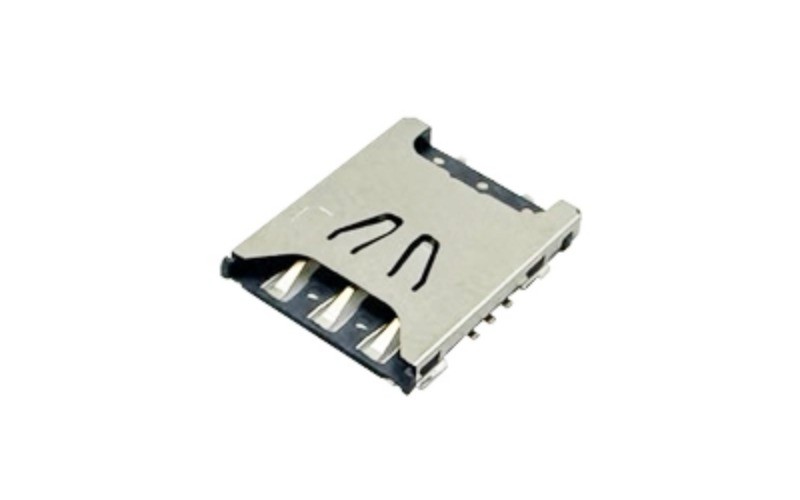
Introduction
The Nano SIM card connector is one of the most widely used interconnection components in modern portable and connected electronics. Since the 4FF (Fourth Form Factor) standard was introduced by ETSI, the Nano SIM has become the default SIM card size across smartphones, IoT modules, automotive telematics units, wearables, and countless other connected devices.
At Moarconn, with over 20 years of dedicated card connector manufacturing experience, selecting the right Nano SIM card connector is rarely a one-size-fits-all decision. Engineers face complex trade-offs involving height constraints, pin configurations, insertion mechanisms, mounting methods, and reliability requirements.
Technical Background: The 4FF Nano SIM Standard
The Nano SIM card, also known as 4FF (Fourth Form Factor), was standardized by ETSI TS 102 221. It measures just 12.3mm x 8.8mm x 0.67mm, approximately 40% smaller than the Micro SIM (3FF) and 90% smaller than the Full-Size SIM (1FF).
Key Specifications
Physical dimensions: Height 1.10mm - 2.85mm, Pin count 6 pins (standard) or 8 pins (with detection), Pin pitch 1.27mm. Ultra-low profile connects (1.10mm - 1.30mm) require SMT-only termination and tighter PCB tolerances.
Selection Guide
Our recommended evaluation order: Height requirement, pin configuration (6-pin vs 8-pin), insertion mechanism (push-push/push-pull/hinge), mounting method (SMT/DIP/hybrid), and special requirements (EMI shielding, card retention clips).
Applications
Nano SIM connectors are deployed across smartphones, IoT modules, automotive telematics, wearables, and medical devices. Automotive applications require extended temperature range and vibration resistance per AEC-Q200.
Conclusion
Browse our Nano SIM card connector product line — including the Push-Pull 1.10mm, Push-Push 1.35mm and Hinge Type 1.43mm Nano SIM connectors — or contact MoarConn to find the right solution for your project.