What Are SIM Card Connectors and How Do They Work?
- Share
- publisher
- MOARCONN
- Issue Time
- Jan 2,2026
Summary
SIM card connectors enable secure electrical and mechanical connection between SIM cards and devices. Learn how they work, key functions, and applications.
Introduction
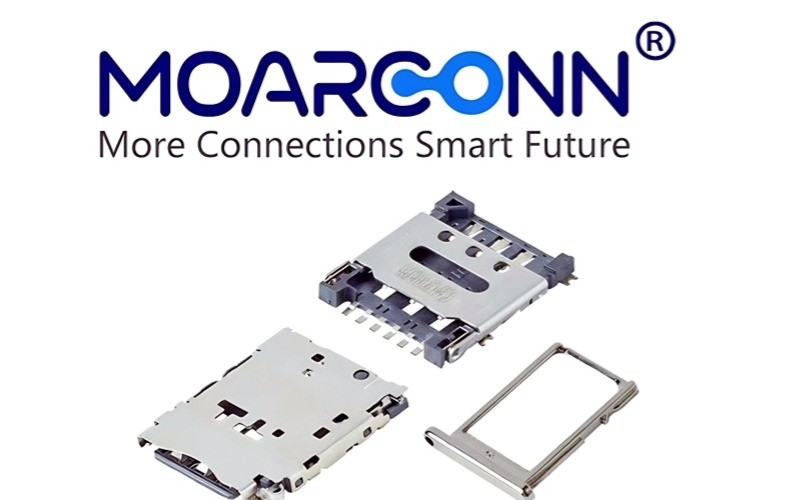
SIM card connectors are essential electromechanical components that enable SIM cards to interface with electronic devices. They play a critical role in subscriber identification, network authentication, and stable cellular communication across mobile, IoT, industrial, and automotive applications.
What Is a SIM Card Connector?
A SIM card connector is a precision socket mounted on a printed circuit board (PCB) that mechanically holds a SIM card and electrically connects its contact pads to the host device.
It serves as the physical interface between the SIM card (Subscriber Identity Module) and the device’s baseband or communication module. Without a SIM card connector, the SIM card cannot communicate with the system or access cellular networks.
Typical applications include:
Smartphones & tablets
IoT modules & smart meters
Automotive telematics
Industrial terminals
How Do SIM Card Connectors Work?
Mechanical Operation
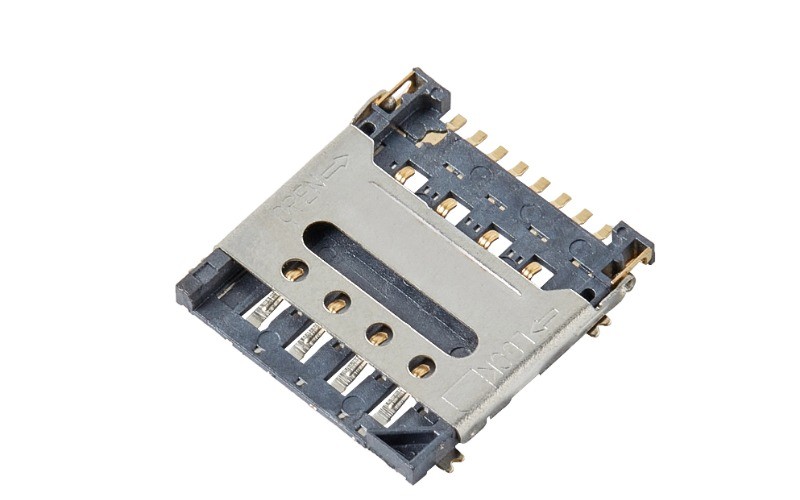
SIM card connectors are designed to ensure precise alignment and secure retention of the SIM card. When inserted, the card is guided into position and held firmly by the connector structure.
Common structural elements include:
Connector housing (plastic or metal)
Spring-loaded contacts
Retention mechanism (push-pull, push-push, hinged, or tray type)
Electrical Contact & Signal Transmission
Once inserted, the connector’s spring contacts press against the SIM card’s gold pads, establishing low-voltage electrical connections for power and data transmission.
Typical SIM signal lines include:
VCC (power)
GND (ground)
CLK (clock)
I/O (data)
RST (reset)


Core Functions of SIM Card Connectors
1. Reliable Electrical Connectivity
High-quality SIM card connectors ensure consistent contact resistance and signal integrity throughout the product lifecycle.
2. Mechanical Stability & Protection
The connector prevents card movement caused by vibration, shock, or thermal expansion—especially critical in automotive and industrial environments.
3. Correct Orientation & Card Detection
Most SIM connectors include polarization features and optional card-detect switches to prevent incorrect insertion and enable system detection.
4. Long-Term Durability
SIM card connectors are designed for thousands of insertion cycles without performance degradation.
Common Types of SIM Card Connectors
• Push-Pull type
• Push-Push type
• Hinged type
• Tray type
Each type offers different advantages in terms of user experience, reliability, and device thickness.
Why SIM Card Connector Quality Matters
Despite their small size, SIM card connectors directly affect network stability, device reliability, and field failure rates. Poor contact design or inadequate plating can cause intermittent connections or data loss.
SIM Card Connector Solutions from MOARCONN
MOARCONN is a professional manufacturer specializing in card connector solutions. Its SIM card connectors are designed for reliability, durability, and efficient PCB integration.
MOARCONN supports:
• Nano, Micro, and standard SIM formats
• Push-pull, push-push, and hinged structures
• SMT designs for automated assembly
• Industrial, IoT, and automotive-grade requirements
Conclusion
SIM card connectors are precision components that ensure secure mechanical retention and stable electrical communication. Understanding how they work and choosing a reliable supplier like MOARCONN helps ensure long-term product performance.