How to Choose the Right Nano SIM Card Connector: An Engineer’s Guide
- Share
- publisher
- MOARCONN
- Issue Time
- Oct 27,2026
Summary
Learn how to choose a Nano SIM Card Connector by comparing types, PCB footprints, durability, and key specifications.
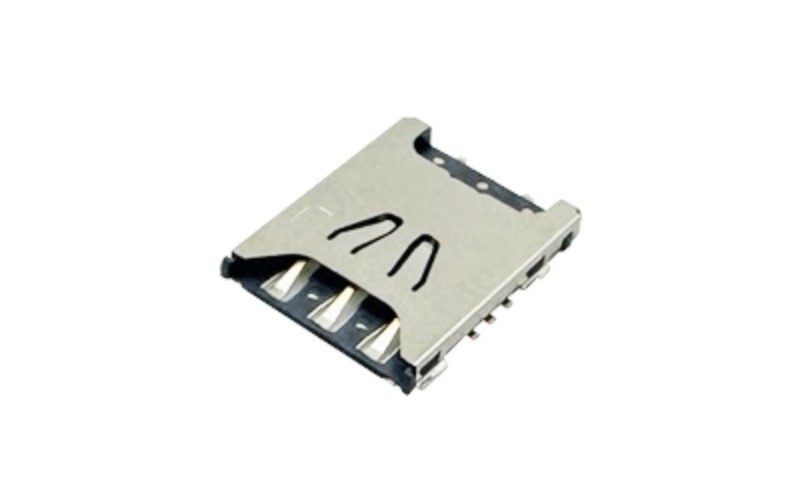
How to Choose the Right Nano SIM Card Connector: An Engineer’s Guide
Introduction
Choosing the right Nano SIM Card Connector is essential for reliable connectivity, compact design, and long-term performance. Whether you are developing IoT devices, GPS trackers, industrial equipment, or communication modules, the right connector should meet your mechanical, electrical, and manufacturing requirements.
This guide covers the key factors engineers should consider when selecting a Nano SIM connector.
1. Understand the Different Connector Types
Nano SIM connectors are available in several designs:
Push-Push: Press the card to insert or eject it. Ideal for convenient card replacement.
Push-Pull: Offers a simple structure and is suitable for compact electronic devices.
Hinged: Uses a hinged cover to secure the SIM card.
Tray Type: Allows easy card installation and removal through a dedicated tray.
Choose the mechanism according to card access, available space, and maintenance requirements.
2. Check Size and PCB Footprint
For compact devices, connector height and PCB footprint are critical. A low-profile Nano SIM Card Connector can help save space, but engineers must also consider mounting pads, card insertion clearance, and enclosure dimensions.
Always check the manufacturer's datasheet and recommended PCB footprint before starting PCB layout.
3. Evaluate Electrical Performance and Durability
Before selecting a connector, review these specifications:
Number of contacts and pin configuration
Rated voltage and current
Contact resistance
Insertion and extraction cycle rating
Operating temperature range
Card-detection switch options
Choose specifications that match your device's operating environment and expected service life. Prototype testing can help verify contact reliability and mechanical performance.
4. Consider SMT Assembly and Customization
For high-volume production, an SMT Nano SIM Card Connector can support automated PCB assembly. Confirm the recommended soldering process, footprint compatibility, and inspection requirements with the manufacturer.
If standard products do not meet your design requirements, ask about customized dimensions, mounting options, or connector mechanisms.
5. Where Are Nano SIM Connectors Used?
Nano SIM connectors are commonly used in:
IoT and cellular communication modules
GPS trackers and navigation devices
Industrial monitoring equipment
Networking and wireless devices
Compact consumer electronics
Each application has different requirements for size, durability, accessibility, and environmental performance.
Why Choose Moarconn?
Moarconn specializes in card connectors, including Nano SIM, SIM, SD, and Micro SD connectors. We provide product options for different installation spaces and application requirements, helping engineers identify suitable connector solutions for their projects.
Visit www.moarconn.com to explore our products or contact our team to discuss your connector requirements.
Conclusion
Selecting the right Nano SIM Card Connector involves more than checking dimensions. Consider the insertion mechanism, PCB footprint, electrical specifications, durability, and assembly process before making your decision.
By evaluating these factors early, engineers can reduce design risks and improve product reliability. Moarconn is ready to help you explore suitable Nano SIM connector solutions for your next project.