Nano SIM Card Connectors for IoT, Automotive, and Industrial Devices: How to Design for Harsh Environments
- Share
- publisher
- MOARCONN
- Issue Time
- Sep 3,2026
Summary
Learn how to select Nano SIM Card Connectors for IoT, automotive, and industrial devices in harsh environments.
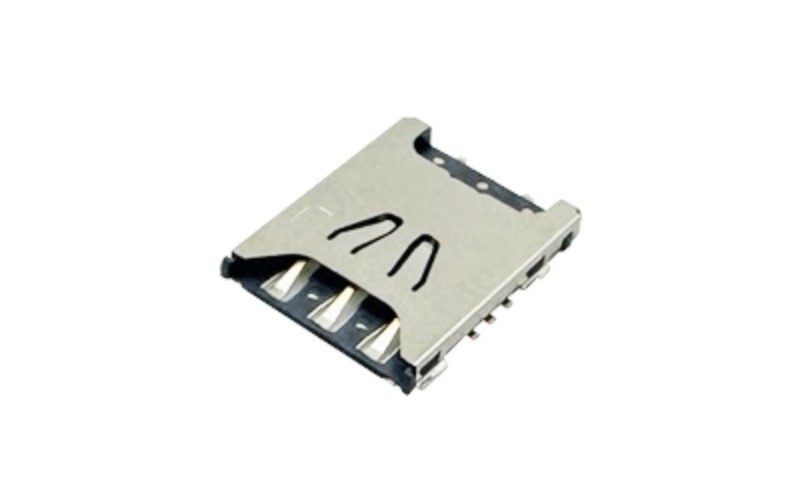
Nano SIM Card Connectors for IoT, Automotive, and Industrial Devies: How to Design for Harsh Environments
“Does this connector support a Nano SIM card?”
1. What Is a Nano SIM Card Connector?
2. Why Nano SIM Card Connectors Matter in IoT, Automotive, and Industrial Devices
3. What Makes an Environment Harsh for a Nano SIM Connector?
3.1 Vibration
3.2 Mechanical Shock
3.3 Temperature
3.4 Humidity and Corrosion
3.5 Dust and Contamination
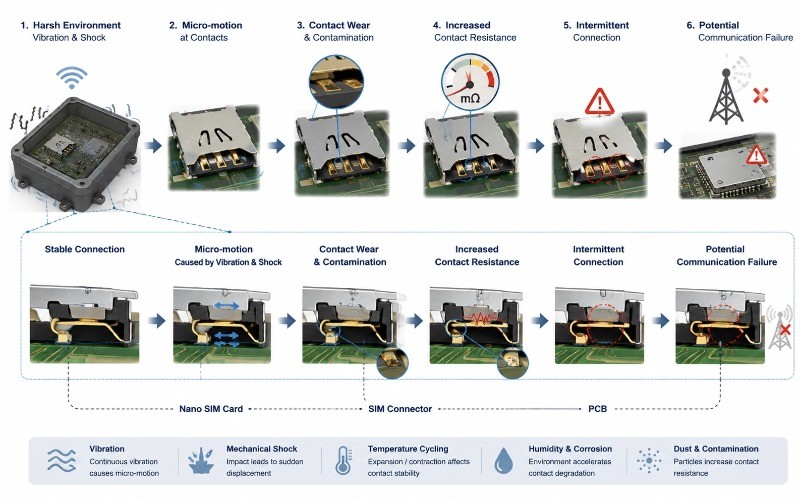
4. How Harsh Environments Affect Nano SIM Connector Reliability
Environmental stress → mechanical movement → contact degradation → electrical instability → potential communication failure
Vibration
Engineer's Note
5. Key Nano SIM Card Connector Design Considerations
5.1 Contact Force
5.2 Contact Material and Plating
5.3 Card Retention
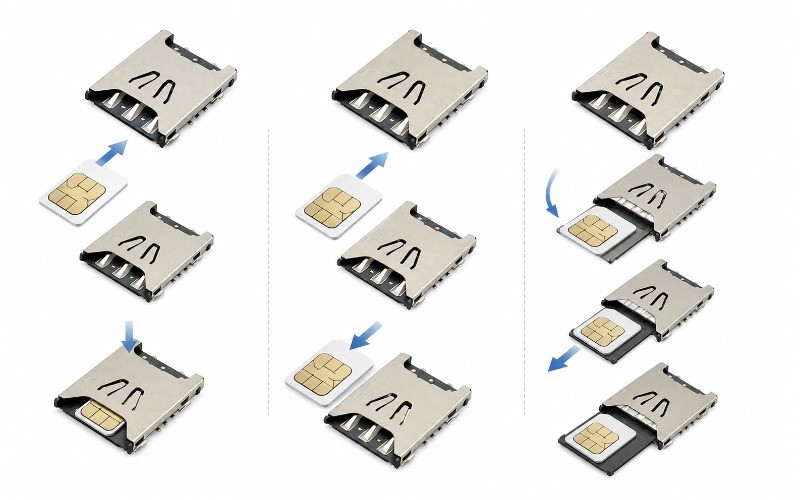
5.4 Push-Push vs. Push-Pull vs. Hinged/Tray
Push-Push
Potential advantages:
Push-Pull
Potential advantages:
Hinged / Tray Type
Potential advantages:
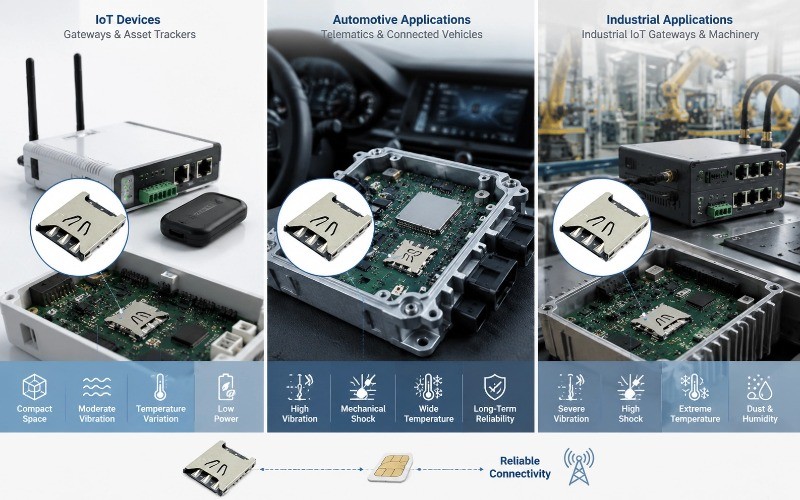
6. IoT vs. Automotive vs. Industrial Nano SIM Connector Requirements
| Design Requirement | IoT | Automotive | Industrial |
High | High | High | Medium–High |
| Low profile | High | High | Medium |
Vibration resistance | Medium–High | Very High | High |
Shock resistance | Medium | Very High | High |
Temperature range | Application-dependent | High priority | High priority |
Card retention | High | Very High | Very High |
Insertion durability | Medium–High | Medium–High | High |
Corrosion resistance | Application-dependent | High | High |
| Easy serviceability | Medium–High | Medium | High |
| Custom mechanical design | Often useful | Often useful | Often useful |
7. Nano SIM Card Connector Design for IoT Devices
Small size + long-term reliability.
PCB Space
Mechanical Stability
Serviceability
Environmental Protection
8. Nano SIM Card Connectors for Automotive Applications
Temperature
Vibration
Mechanical Shock
Long-Term Reliability
Packaging
9. Nano SIM Card Connectors for Industrial Devices
10. PCB Design Considerations for Nano SIM Card Connectors
10.1 Follow the Manufacturer's Footprint
10.2 Check Connector Height
10.3 Maintain Mechanical Clearance
10.4 Consider PCB Mechanical Stress
11. Nano SIM Connector Reliability Testing
Mechanical Testing
Environmental Testing
Electrical Testing
Manufacturing Validation
12. Common Nano SIM Connector Failure Modes
| Failure Mode | Possible Cause | Engineering Consideration |
| Intermittent SIM connection | Unstable contact | Check contact force and card retention |
SIM not detected | Detection switch or contact issue | Verify mechanical and electrical interface |
Card movement | Insufficient retention | Verify material and operating range |
Connector damage | Excessive insertion force | Review insertion mechanism |
Solder joint failure | PCB/mechanical stress | Review footprint and mechanical support |
Contact wear | Excessive mating cycles | Select appropriate durability rating |
Corrosion | Humidity/contamination | Review material, plating, and enclosure |
Thermal reliability issue | Temperature cycling | Verify material and operating range |
13. How to Select the Right Nano SIM Card Connector
Mechanical
Electrical
Environmental
Manufacturing
Product Lifecycle
14. Why Work With MOARCONN for Nano SIM Card Connectors?
Engineering Support From Prototype to Production
Design → Mold Making → Product Assembly → After-Sales Service
Customized Nano SIM Connector Solutions
15. Standard vs. Customized Nano SIM Card Connectors
Choose a Standard Connector When:
Consider Customization When:
16. Engineer's Design Rule: Select the Connector Before the PCB Is Frozen
Do not wait until the PCB layout is finished to select the Nano SIM connector.
Application requirements
Environmental requirements
Connector mechanism
Mechanical drawing
PCB footprint
Prototype
Reliability testing
DFM
Mass production
17. Nano SIM Card Connector Selection: Final Checklist
Application
Environment
Mechanical
Electrical
Manufacturing
Reliability
18. Conclusion
Card format + connector mechanism + contact design + card retention + PCB layout + enclosure + environmental conditions + reliability testing.
About MOARCONN
Recommended Product: Looking for a reliable Nano SIM connector for your project? MOARCONN's Nano SIM Card Connector Push-Pull Height 1.10mm — 6-contact Nano SIM (4FF) layout, push-pull mechanism, ultra-low 1.10mm height for smartphones, wearables and IoT modules. Contact us for datasheets, free samples and custom options.
MOARCONN Quality Anchors
Every MOARCONN card socket connector is validated to 10,000 mating cycles (tested to GB/T 5095.7-1997; over 2× the 3,000–5,000 cycles common in the industry), operates from -45°C to 80°C, and ships with contact resistance ≤30mΩ thanks to ≥0.025µm gold-plated phosphor-bronze terminals. IATF 16949 certified production supports 0 MOQ orders with 7-day sampling and a 25-day development cycle — backed by in-house mold, stamping and injection molding factories and 32 granted patents.