Nano SIM Card Connectors in Modern Wireless & IoT Devices
- Share
- publisher
- MOARCONN
- Issue Time
- Jun 23,2026
Summary
Nano SIM Card Connectors for modern wireless and IoT devices, delivering compact design, high reliability, and stable cellular connectivity.
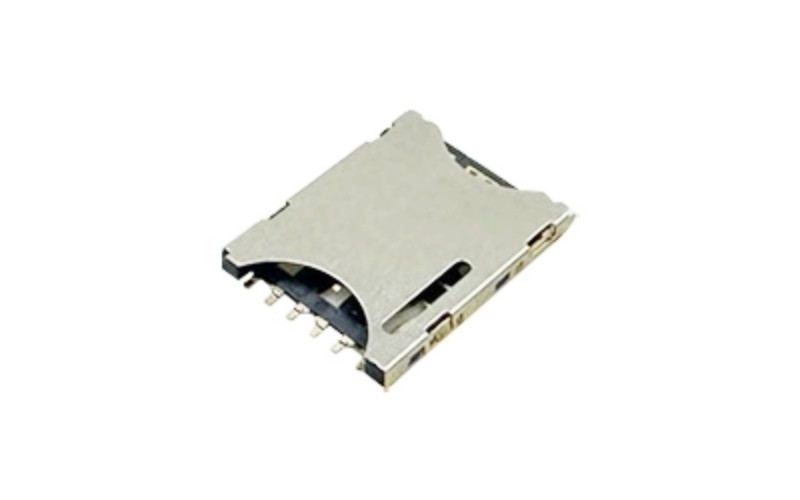
Nano SIM Card Connectors in Modern Wireless & IoT Devices
A Comprehensive Engineering Guide by Moarconn
Empowering Wireless, IoT & Connected Devices with Reliable Nano SIM Connectivity
1. Introduction: Why Nano SIM Card Connectors Matter
In the rapidly evolving landscape of wireless communications and IoT innovation, Nano SIM Card Connectors are more than just passive components — they are critical enablers of connectivity, reliability, and performance. With the global push toward IoT, wearable technology, industrial telemetry, and high-speed cellular interfaces, the demands on SIM interfaces have never been higher.
At Moarconn, we engineer and manufacture high-precision Nano SIM Connectors designed to meet the rigorous needs of modern wireless and IoT devices. Our connectors deliver robust performance in compact form factors, ensuring reliable cellular communication across diverse use cases.
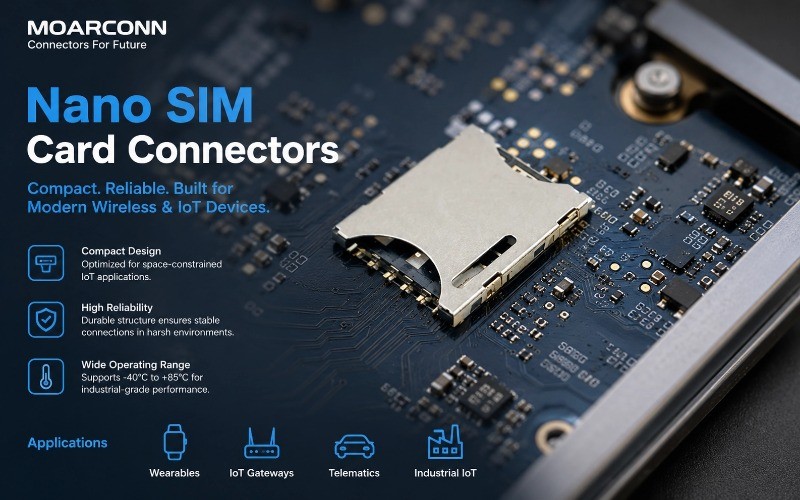
2. What Makes Nano SIM Card Connectors Essential for Wireless & IoT Devices
Nano SIM Connectors are crucial in devices that require compact design, high reliability, and seamless connectivity. Their key roles include:
Enabling Cellular Communication: They act as the physical interface between the SIM card and the modem, affecting signal integrity and network performance.
Space-Optimized Design: With shrinking device footprints — especially in wearables and IoT modules — Nano SIM connectors offer minimal PCB area usage.
High Durability: Engineered for repeated insertions and harsh environments in industrial or outdoor deployments.
Modern wireless platforms — from 5G modems to low-power IoT hubs — demand SIM connectors capable of maintaining electrical stability and mechanical strength over time.
At Moarconn, our Nano SIM connectors undergo stringent testing for insertion cycle durability, contact reliability, and environmental resilience, meeting the highest industry standards.
3. Key Features & Performance Metrics to Consider
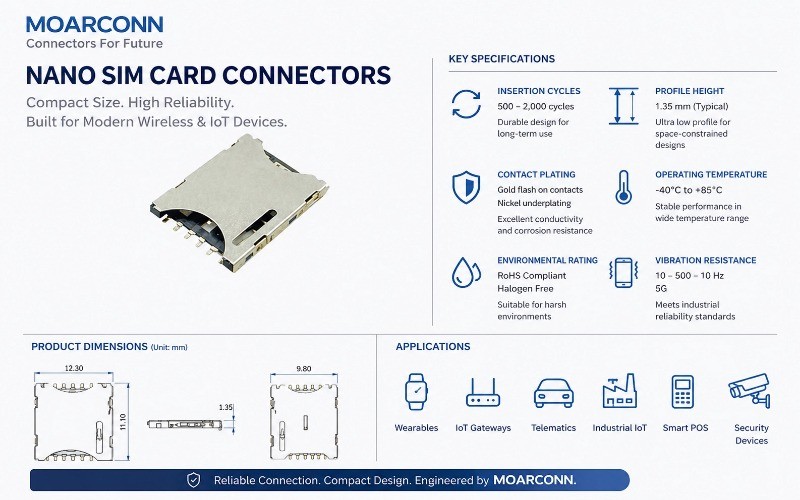
When selecting a Nano SIM connector for your design, several engineering attributes are essential:
3.1 Compact Footprint & Low Profile
Nano SIM connectors boast one of the smallest form factors among SIM interfaces. In space-constrained applications like wearables and edge IoT sensors, every millimeter counts.
3.2 Mechanical Reliability
Durability is rated by insertion cycles — the number of times a SIM card can be inserted and removed before wear affects performance. Moarconn connectors exceed standard thresholds, ensuring long-term reliability.
3.3 Environmental Resilience
Industrial and outdoor IoT installations demand connectors that withstand:
temperature extremes
vibration and shock
humidity and corrosion
Moarconn’s ruggedized Nano SIM connectors are engineered with durable contact plating and robust housing materials designed for harsh conditions.
4. Nano SIM Connector Types & Their Engineering Tradeoffs
Nano SIM connectors come in multiple mechanisms, each optimized for specific device requirements:
Connector Type Typical Use Case Key Benefits
Push-Push Consumer devices Smooth card ejection, compact
Push-Pull Industrial equipment Secure retention, ergonomic
Tray / Hinged Rugged & automotive Robust protection, secure lock
At Moarconn, we provide a diverse portfolio of Nano SIM connector designs, enabling engineers to choose the best match for:
Wearables & Consumer Electronics
Telematics & Automotive Systems
Industrial IoT Gateways
5G Cellular Modems
5. Best Practices for PCB Integration & Layout
Designing the PCB footprint around a Nano SIM connector requires careful planning. Key considerations include:
Placement near board edge: For user access and mechanical stability
Routing of signal nets: Ensuring minimal noise and optimal signal integrity
EMI/ESD protection: Critical for wireless modules exposed to radio frequency fields
Moarconn engineers recommend placing the connector away from high-frequency traces and grounding the SIM shield to reduce interference.
6. Real-World Use Cases: Wireless & IoT Deployments
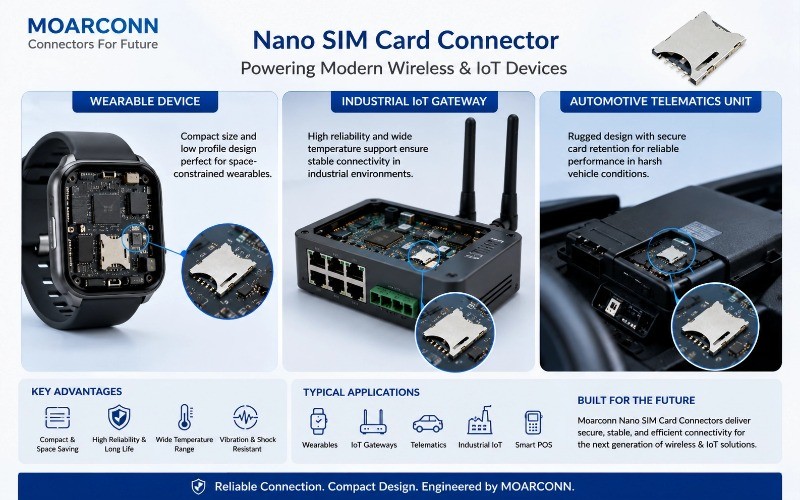
6.1 Smart Wearables
Wearable devices rely on compact SIM connectors that don’t compromise user comfort or device thickness. Moarconn’s low-profile Nano SIM solutions are widely used in smart watches and health trackers.
6.2 Industrial IoT Modules
Industrial sensors and gateways operate in harsh environments. Nano SIM connectors designed for durability ensure uninterrupted machine-to-cloud connectivity.
6.3 Automotive Telematics
Telematics systems require connectors that withstand vibration and temperature swings. Moarconn’s automotive-grade Nano SIM connectors meet rigorous durability requirements.
7. Future Trends: Dual Nano SIM & eSIM Coexistence
As 5G and IoT ecosystems evolve:
Dual Nano SIM designs are increasingly adopted to support simultaneous multi-network connectivity.
eSIM and iSIM technologies augment physical SIM connectors, but Nano SIM connectors remain vital for backward compatibility and fallback use cases.
Moarconn stays ahead of these trends by developing solutions compatible with hybrid SIM architectures.
8. Why Choose Moarconn for Nano SIM Card Connectors
With decades of engineering experience and manufacturing excellence, Moarconn stands out in providing:
Engineering expertise in connector design
High quality, reliability-verified products
Customizable solutions to fit unique application needs
Global support for R&D, prototyping, and volume production
Visit our product hub for Nano SIM Connectors at www.moarconn.com — where innovation meets performance.
9. FAQ: Nano SIM Connector Selection & Design
Q: What is the difference between Nano SIM and Micro SIM connectors?
A: Nano SIM connectors support smaller form factors and tighter PCB footprints, ideal for modern compact devices.
Q: How many insertion cycles should a connector support?
A: Industry standard ranges from ~500 to 2000+ cycles. Moarconn designs exceed these thresholds for longevity.
Q: Are Nano SIM connectors suitable for industrial IoT?
A: Yes — ruggedized connectors from Moarconn are designed for harsh environments requiring extended reliability.
Conclusion
Nano SIM Card Connectors are foundational components in modern wireless and IoT designs. With the rapid expansion of connected devices across consumer, industrial, and automotive markets, choosing the right connector is a strategic engineering decision that impacts performance, reliability, and product lifespan.
At Moarconn, we combine deep technical expertise with robust manufacturing to deliver SIM connector solutions that engineers trust.