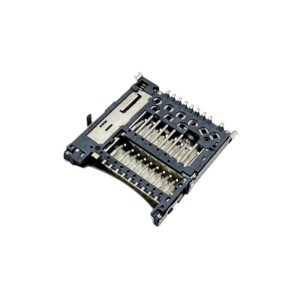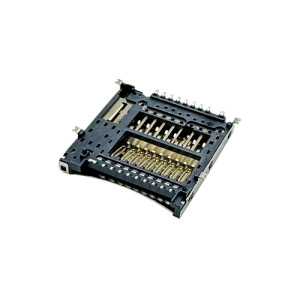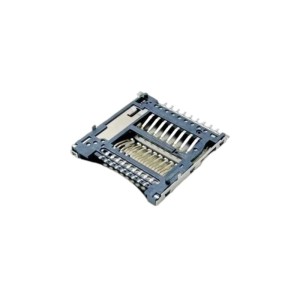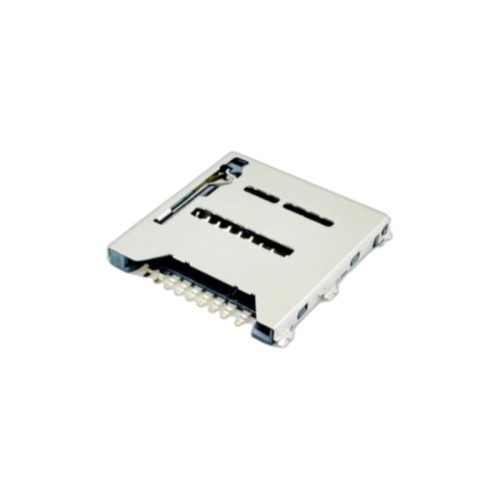
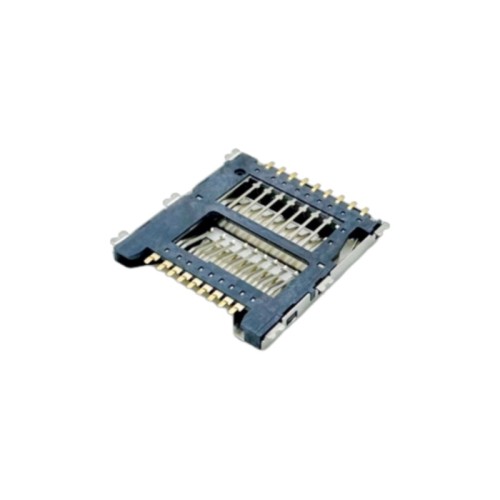
Micro SD 7.1 Card Connector 985MB/s Push-Pull Type Height 1.55mm
- Model
- Micro SD Card Connector(MC155-T1150-20)
Item specifics
- Product Height
- 1.55mm
- Usable Memory Card
- Micro SD 7.1 memory card / TF memory card
- Base Material
- LCP
- Terminals Material
- Phosphorous Bronze
- Shell Material
- Stainless Steel
Review
Description
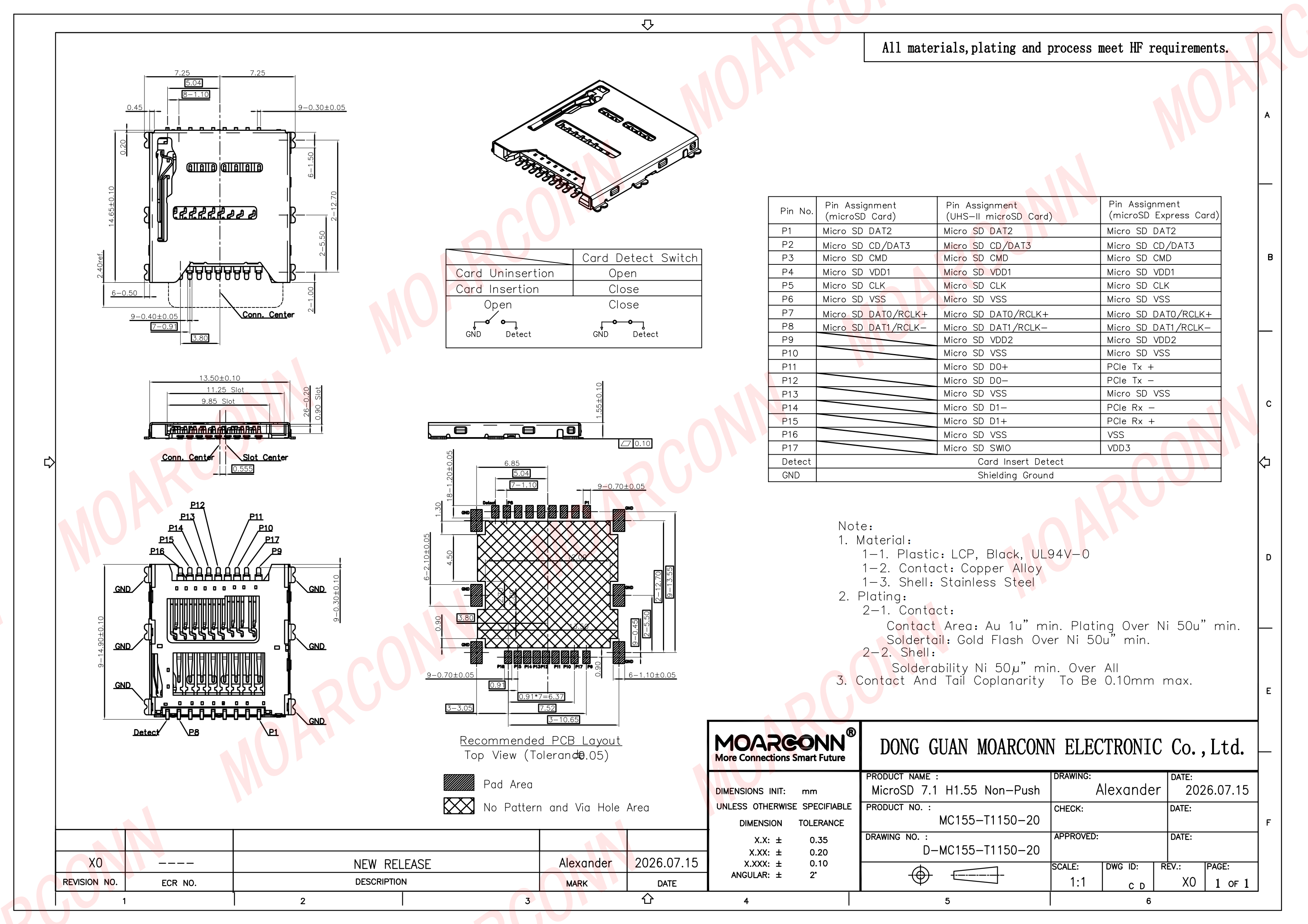
A 1.10mm pitch, 8-pin Micro SD 7.1 card connector in a top mount, push-pull design. Engineer reply within 1 working day · RoHS compliant · Custom options available Connector failures are rarely dramatic. They are a few milliohms of drift, a lifted pad, a card that reads intermittently in a hot car. Push-pull has no ejector — fewer parts, lower cost, and nothing to jam or wear out. The card is held by the shell and pulled straight out. Gold-plated terminals (≥0.025 µm) hold contact resistance to ≤30 mΩ with tight coplanarity control, keeping high-speed signals stable through humidity and thermal cycling. An LCP insulator takes lead-free reflow without deformation; the stainless-steel shell keeps the frame flat; terminals are coplanarity-controlled to ±0.05 mm. A reliable detect switch guarantees card detection, backed by the retention structure, for 10,000 insertion cycles. A datasheet lists values. A specification explains what each value controls. Final tolerances, plating thickness and acceptance criteria are confirmed on the 2D drawing and datasheet. Every structural decision keeps the card reading and held in place. Same card, same interface — the family offers different height and mechanism combinations. Most mistakes are the right connector in the wrong stack-up. Wherever the card is a user-accessible medium, retention and contact stability matter more than price. Micro SD sockets are smaller with fewer pins (8) for compact devices like phones and IoT; standard SD sockets fit cameras and laptops. The card types differ and are not interchangeable. Speed: Micro SD 3.0 (UHS-I) ~104 MB/s, 4.0 (UHS-II) ~312 MB/s, 7.1 (SD Express) up to ~2 GB/s. Higher speed demands more signal integrity. Yes. SMT sockets use an LCP insulator and coplanarity-controlled terminals for standard lead-free reflow; the exact profile is in the datasheet and drawing. Send the part number and drawing. We compare pad layout, height, pitch and retention, then confirm drop-in or layout-change before sampling. Samples are free, sampling takes 7 days, and volume production is 7–15 days. MOQ and lead time are confirmed with the quotation; zero-MOQ trial runs are available. Tell us the product thickness, card type, annual volume and the part you are replacing (if any). An engineer replies within one working day with the right model, the drawing you need, and what we would change in your layout — if anything. Mention part number MC155-T1150-20 for the fastest reply.1.55mm Micro SD 7.1 card connector
Stable reads, reliable insertion
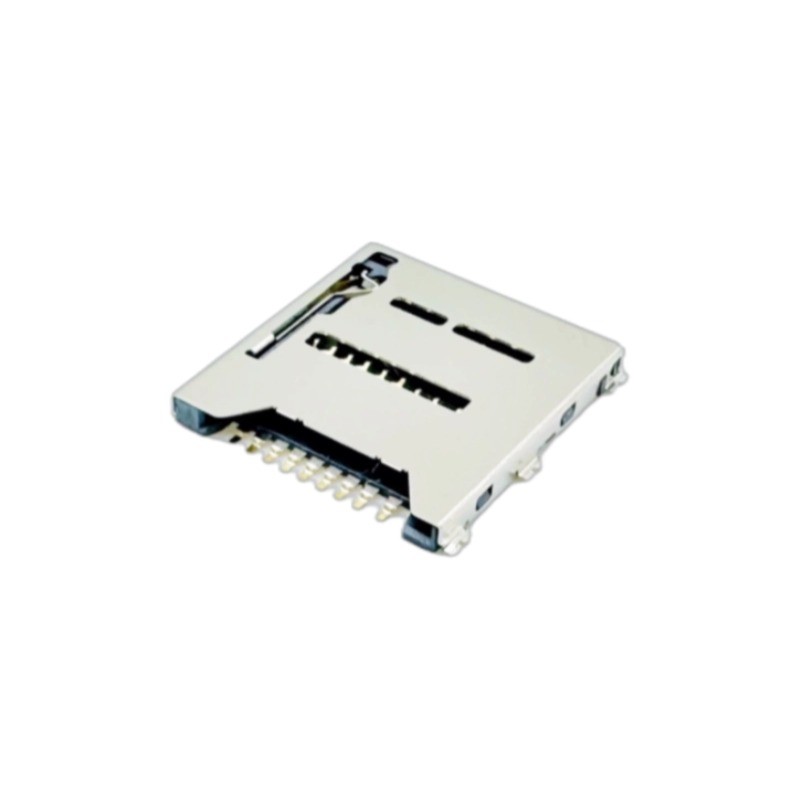
A card connector is invisible — until it fails
The more mechanism, the more failure points
Data drops at speed, card not detected
Reflow warps the insulator, pads lift
Card detection fails after a few insertions
Every parameter, translated into a design decision
Mechanical
Electrical
Materials & plating
Environment & ordering
Four decisions that keep the card reading
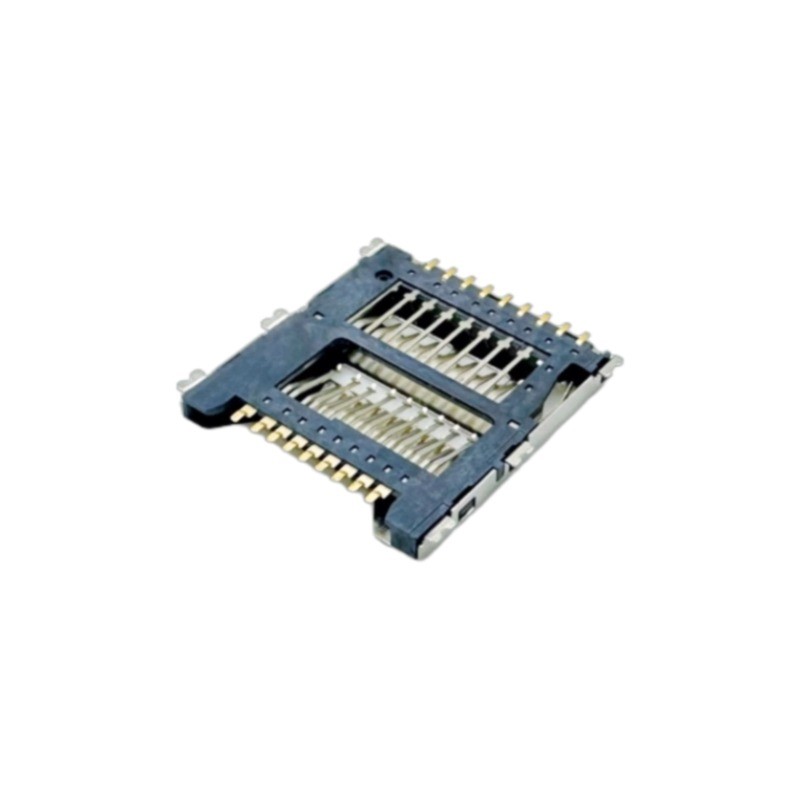
Same card, multiple mechanical answers
Model Height Mechanism Mounting Choose it when MC225-T2250-10 2.25mm Push-push Top mount Push-push MC155-T1150-20This page 1.55mm Push-pull Top mount Push-pull MC155-T1250-10 1.55mm Push-push Top mount Push-push MC127-T3250-10 1.27mm Push-push Top mount Push-push Built for products that get carried, dropped and used daily
Everything your mechanical engineer needs
Frequently asked questions
What is the difference between Micro SD and standard SD sockets?
What is the difference between Micro SD 3.0 / 4.0 / 7.1?
Is it reflow compatible?
Can you cross-reference an imported brand?
What is the minimum order and lead time?
Send your stack-up. Get a drawing, a sample and a straight answer.